If you're coming from Magic: The Gathering, one of the first questions you'll ask about Sorcery is the one that's burned you before: does it rotate? Will the cards I buy today get shoved out of the format in two years, turning a $40 deck into a binder of paperweights?
Short answer: no. As of mid-2026, every set from Alpha through Gothic is legal in Sorcery's main Constructed format, and the publisher has signalled no rotation. The card you buy today is the card you can still play in three years. That single design choice changes the whole calculus of buying in — and it's worth understanding what it does and doesn't promise.
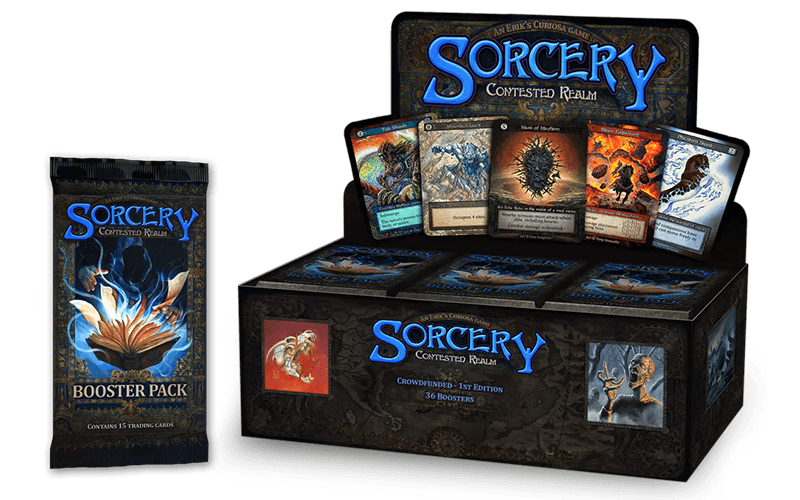
The original Alpha set — via sorcerytcg.com
What "no rotation" actually means
In a rotating game (Magic's Standard, Pokémon's Standard), sets cycle out of the competitive format on a schedule. Cards you paid for become tournament-illegal whether or not they're still good. It keeps the metagame fresh, but it also means the format has a built-in expiry date on your collection.
Sorcery doesn't do that. Its Constructed format is non-rotating: every set released so far stays legal. There's no calendar quietly counting down on your Alpha cards. The full breakdown of Sorcery's formats covers the specifics, but the headline is simple — what's legal stays legal.
Why this is genuinely good for buyers
This is the part that matters if you're deciding whether to spend money:
- Your purchase keeps its use. A deck you build now isn't on a depreciation clock toward illegality. That makes the entry cost easier to stomach — you're buying a thing you'll keep using, not renting a season of relevance.
- You can buy older sets without fear. Picking up an older set isn't a nostalgia move; those cards are live in the current format.
- It rewards learning the game, not chasing the calendar. You're not re-buying a deck every rotation just to keep playing competitively.
For a lot of lapsed Magic players, this is the selling point — the reason Sorcery feels less like a treadmill. If you're weighing the two directly, the Sorcery vs Magic comparison digs into how differently they treat your wallet over time.
The honest trade-offs
No rotation isn't a pure win, and pretending otherwise would be the kind of hype this site avoids:
- Power creep has nowhere to go. In a rotating game, an overpowered card eventually ages out. In a non-rotating one, a dominant card stays dominant until it's specifically addressed — so the publisher leans on errata and the Collection / sideboard system and occasional rules updates instead of rotation to keep things balanced.
- The format only grows. More legal cards over time means a bigger pool to learn and, eventually, a higher ceiling on what a top-tier deck can cost.
- "No rotation" is a current stance, not a written-in-stone guarantee. It's true today and the publisher has given no sign of changing it — but it's a policy, and policies can change. Buy because you want to play the cards, not because you're banking on a permanent promise.
The bottom line
Sorcery's no-rotation model is one of the clearest reasons it appeals to people burned by rotating formats: buy in once, keep playing. It lowers the long-term cost of the hobby and makes older sets worth owning. Just go in clear-eyed — it shifts the balancing burden onto errata rather than the calendar, and "no rotation so far" is a stance, not a contract.
If you're still at the starting line, what Sorcery actually is covers the basics, and is Sorcery worth it in 2026 weighs the whole cost-vs-payoff question before you commit to a first set or precon. For where the competitive scene currently sits, the Play & Compete hub tracks events and formats.
Sources
- Sorcery: Contested Realm — How to Play — official rules hub; Constructed format and set legality — accessed 2026-06-05
- Sorcery: Contested Realm — Alpha set — original-set release and imagery, still format-legal — accessed 2026-06-05