Here's the short answer, because you came for one: if you want to play Sorcery, buy singles. If you want the thrill of cracking packs or you're collecting the art, buy sealed — with your eyes open about what you're actually paying for. The longer answer, and the one exception that flips the whole thing, is below.
This is the question every new player asks, usually right after they've dropped a booster box into a cart and felt their stomach lurch at the price. It's worth slowing down on, because Sorcery's economy doesn't reward the instinct most card-game players walk in with.
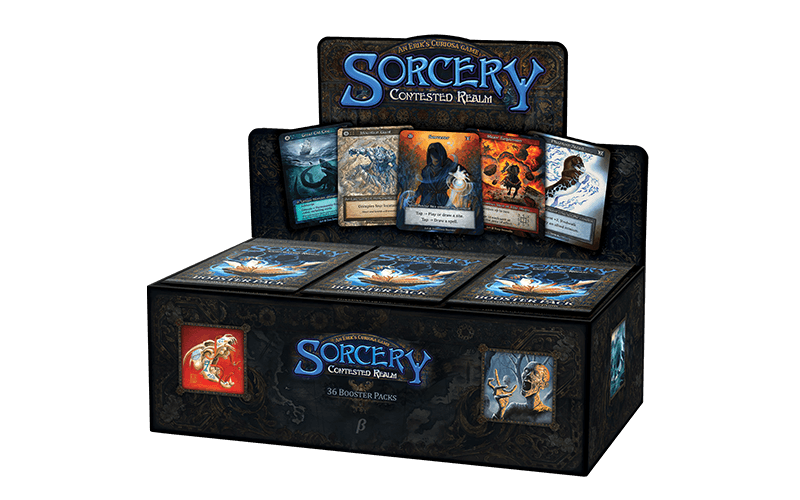
A sealed Beta booster box — via sorcerytcg.com
What "sealed" actually means here
"Sealed" isn't one thing. In Sorcery it covers three different purchases:
- Booster boxes and packs — randomised cards, with a small chance at the rare premium "Curio" pulls. This is the gamble.
- Preconstructed decks (precons) — a fixed, ready-to-play deck in a box. Sealed, but not random.
- Sealed events — buying packs to build a deck on the spot at a tournament.
Most people mean booster boxes when they ask this question, so that's the comparison that matters: a box of random packs versus buying the specific cards you want.
The case for singles
For a player, singles win on almost every axis. You buy the exact cards your deck needs — no fourth copy of a card you'll never run, no "well, I got something." You spend money toward a finished deck instead of toward a chance at one. And because Sorcery's rarity system caps how many copies of the best cards a deck can run, the shopping list for a competitive deck is shorter and cheaper than newcomers expect.
Where to buy them: the peer-to-peer Buy / Sell / Trade channels and the stores in Where to Buy, with price guides to sanity-check what you're paying. If you want a live read on what a card actually trades for before you commit, the market data tracker updates daily.
The case for sealed
Sealed isn't a mistake — it's just a different purchase. Cracking packs is genuinely fun, and for some people the opening is the hobby. Boxes also feed the collector side: the hand-painted Curios are deliberately scarce (the publisher has never published a pull rate), which makes pulling one feel like hitting an art lottery rather than completing a set. If you value the experience and the chase over building a specific deck efficiently, a box is the right buy.
What sealed is not is a reliable shortcut to a good deck. Open a box and you'll get a spread of cards weighted toward commons, most of which won't be the ones your eventual deck wants. As a route to "I have the deck I came for," it's the slow, expensive lane.
The one exception: start with a precon
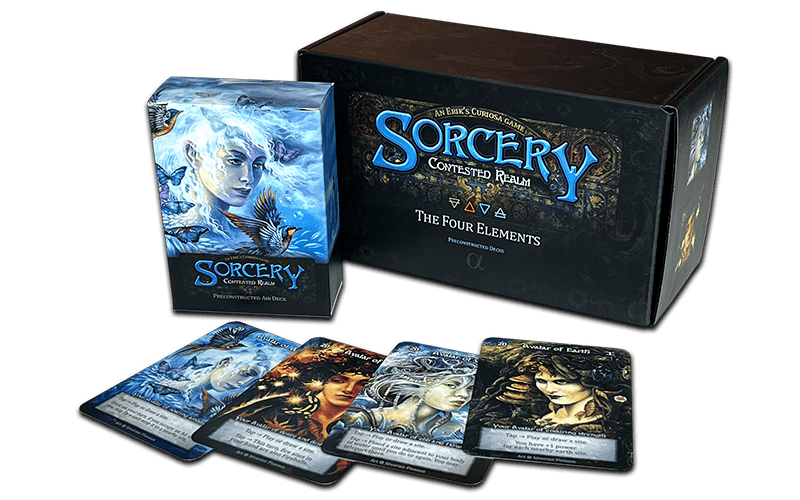
Sorcery preconstructed decks — via sorcerytcg.com
There's a third option that beats both for a first purchase: a precon. It's sealed product — so it's cheap and self-contained — but there's no gamble, because it's a complete, playable deck out of the box. You get a real game on the table on day one, then upgrade it with a handful of singles as you figure out what you like. For most newcomers that's the correct entry point, and which precon to buy first walks through the options.
The bottom line
If you're here to play: buy a precon to start, then fill the gaps with singles. It's the cheapest path to a deck you actually want, and it skips the box-cracking variance entirely.
If you're here to collect, or pack-cracking is the fun for you: buy a box — just buy it as entertainment plus a lottery ticket, not as value. Going in with that framing is the difference between a good time and a bad surprise.
Either way, decide before the cart, not after. If you're still weighing whether to buy in at all, is Sorcery worth it in 2026 is the gut-check, and what Sorcery actually is covers the basics if you landed here first.
Sources
- Sorcery: Contested Realm — Beta set — booster box and product imagery — accessed 2026-06-05
- Sorcery: Contested Realm — Alpha set — preconstructed-deck product imagery — accessed 2026-06-05
- Sorcery market data — daily TCGplayer-sourced singles and sealed prices, for current values referenced above