If you already play a trading card game — Magic, Pokémon, Lorcana — Sorcery: Contested Realm will feel familiar for about thirty seconds, and then it won't. It shares the surface (a deck, a table, two players) and almost none of the assumptions underneath. These are the seven things that actually set it apart, the ones worth knowing before you decide whether it's for you.
If you're starting from absolute zero, the what is Sorcery overview is the gentler on-ramp. This piece is for people who already know what a TCG is and want to know why this one is built differently.
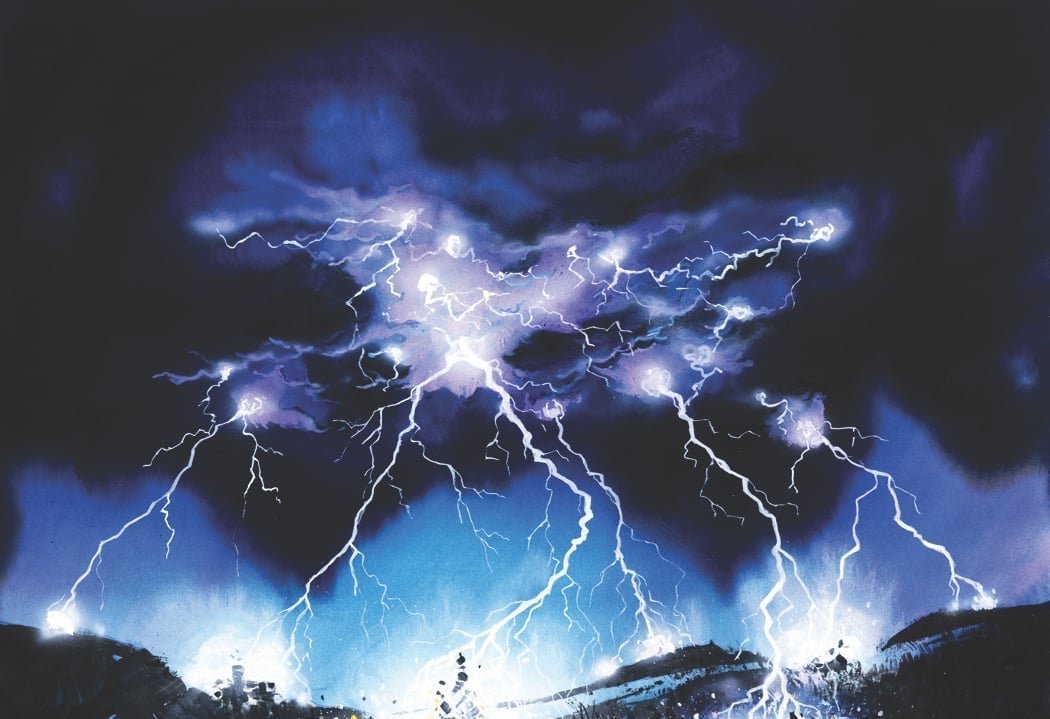
Thunderstorm — via sorcerytcg.com
1. You play with two decks, not one
Most card games hand you a single library. Sorcery splits your deck in two: an Atlas of Sites — the lands you place to build the battlefield and power your spells — and a Spellbook of everything you cast (minions, magics, auras, artifacts). You draw from, and manage, both. It's the single biggest adjustment for anyone coming from a one-deck game, and it changes how every turn feels. The threshold and Sites system is the engine that makes the two-deck design tick.
2. The battlefield is a board, not just a tabletop
Your creatures don't sit in a vague row in front of you — they occupy squares on a grid, across four regions: the surface, underground, underwater, and the void. Where a minion stands decides what it can attack and what can reach it, which turns combat into something closer to a tactics game than a damage-race. The four regions of Sorcery and the way combat resolves on the grid are the parts MTG transplants find most alien — in a good way.
3. The whole game is hand-painted in traditional media
Plenty of card games have lovely art — that on its own isn't the flex. The flex is consistency: across more than a thousand cards, Sorcery's illustrations are all traditional media (the publisher lists "oil, acrylic, water color paintings, pen and pencil, or a mix"), with no glossy digital house style. It gives every set a cohesive, golden-age-of-fantasy look. It won't be why you keep playing — that's the slower, social feel of an actual game — but it's why the cards feel like objects worth keeping.
4. You don't pilot a deck — you are an Avatar
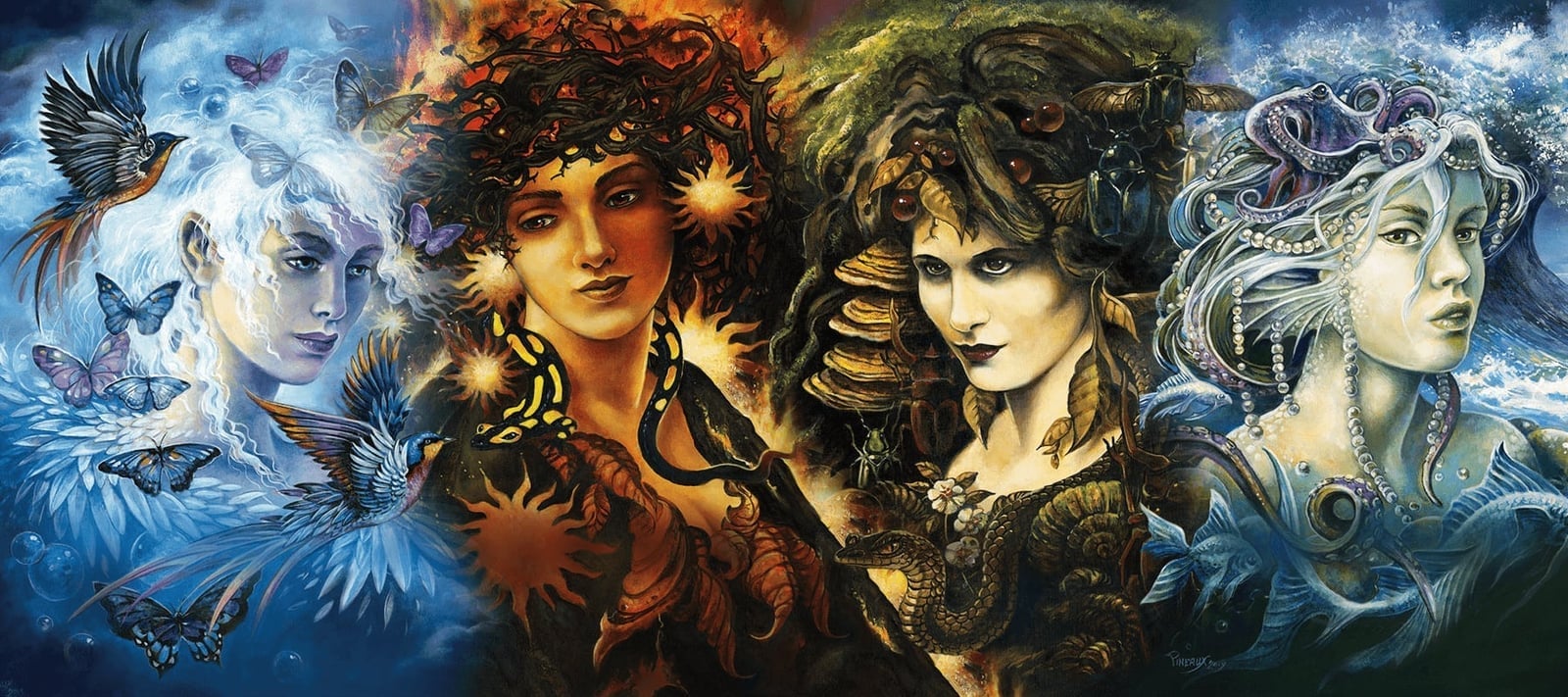
The Alpha Avatars — via sorcerytcg.com
Each player takes the role of an Avatar, a wizard with a life total you're trying to protect while you whittle down theirs — the game calls winning "banishing your foe." Your Avatar isn't just a life counter; it shapes your deck's identity and how you want the game to go. The every Sorcery Avatar explainer walks the full roster.
5. Elements gate your power, not just your mana
Casting a spell costs mana and requires elemental threshold — Air, Earth, Fire, Water — which you only earn by controlling the right Sites. You can't simply jam your best cards together; the board has to support them first. It's why deck-building rewards planning over raw card quality, and why a focused budget deck can punch well above its price.
6. It's made by a tiny independent studio
Sorcery comes from Erik's Curiosa, founded by Erik Olofsson of Path of Exile fame — not a corporate card-game division. That's why it's systems-heavy, opinionated, and unafraid of complexity, and also why the community is smaller and the print runs are tighter. The why Sorcery exists backstory explains how a video-game veteran ended up making one of the most-talked-about paper games of the decade.
7. The chase cards are fine-art collaborations
Sorcery's premium "Curio" cards aren't just rarer printings — they're licensed works from some of the heaviest names in fantasy illustration: Frank Frazetta, Brom, Jeff Easley. Pulling one is closer to owning a print than hitting a foil. The community catalogues these through the resources in Art House & Collectors, and they're a big part of why the secondary market behaves more like an art market than a card market.
Add it up and Sorcery isn't a reskin of a game you've played — it's a different set of choices about what a card game can be. If any of the seven pulled you in, the cheapest way to test it is to play a full game free first: the online play guide and the community deckbuilders in Deckbuilders & Tools let you try before you buy a single Beta precon. And if you're weighing it against what you already play, the Sorcery vs Magic: The Gathering comparison is the head-to-head.
Sources
- Sorcery: Contested Realm — How to Play — official overview; the role-of-an-Avatar framing and the banish-your-foe win condition — accessed 2026-06-05
- Sorcery: Contested Realm — official site — publisher (Erik's Curiosa, founded by Erik Olofsson) and the hand-painted-art statement (oil/acrylic/watercolor/pen/pencil; "golden age of fantasy") — accessed 2026-06-05
- Sorcery: Contested Realm — Alpha set — Avatar and card imagery — accessed 2026-06-05