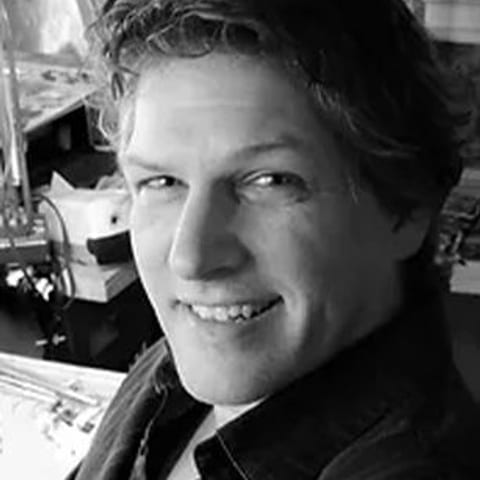
Alan Pollack is an American fantasy illustrator, born in New Jersey in 1964, with a gaming-art career that reaches back to the TSR era. He broke in with a cover for TSR Inc.'s Dungeon magazine in 1991, painted Dungeons & Dragons alongside the house artists of the day, then crossed over to Magic: The Gathering with Wizards of the Coast — starting at the Tempest set in 1997 and going on to produce well over 100 cards. He's also worked for Blizzard Entertainment and Baen Books, was a Hugo Award nominee for Best Professional Artist in 2015, and appeared in Spectrum Vol. 8. He cites Frank Frazetta and Boris Vallejo as his foundational influences, which places him squarely in the painterly, pre-digital fantasy lineage that Sorcery keeps pulling from.
He's one of the largest single contributors to Sorcery's Alpha set, and his work runs across all four printed sets — Alpha, Beta, Arthurian Legends, and Gothic.
Style
Pollack works old-school: the finished art is oil paint on board. His method is a hybrid one he's open about. He draws in Corel Painter — sometimes building a digital color study first as a reference — then prints the drawing and mounts it to hardboard using matte medium, a technique he picked up from Donato Giancola. From there it's traditional oils. He credits Jeff Easley (a fellow Sorcery contributor and TSR colleague) with shaping his glazing approach: laying down a glaze and then pulling details back out with a brush dipped in turpentine.
What that produces on a Sorcery card is rendered, full-color realism with weight to it — solid anatomy, dramatic lighting, the Frazetta/Vallejo DNA. He paints creatures and spell effects with a sense of scale and physical presence: a giant shark built like a megalodon with a tiny mermaid dropped in for size, a wizard channeling raw mind-power shot from overhead. Because Sorcery reproduces physical paintings, the oil surface and glazed depth survive onto the printed card.
He's also said the Sorcery commissions were unusually freeing. By his account, Erik gave him very little art direction, which he contrasts with Magic's more recent habit of handing artists tight thematic briefs. On Sorcery, every artist was left to interpret in their own way, with no shared style guide — which is part of why the game's card faces look so varied table-to-table.
Cards on Sorcery
Pollack's footprint is broad. Collector Arthouse — the backbone of the game's original-art and collector scene — lists him across Alpha, Beta, Arthurian Legends, and Gothic, and names a long run of Alpha/Beta-era pieces in his gallery, including Arcane Barrage, Archangel Michael, Ball Lightning, Barrow Wight, Beacon, Bluecap Knockers, Cerberus in Chains, Chain Lightning, Clairvoyant, Disintegrate, Divine Healing, Drown, Drums of Doom, Dwarven Digging Team, and Earthquake.
For Arthurian Legends, two cards are documented by name through Sorcery's own first-look posts: Sir Pelleas (revealed May 2024) and Keening Banshee (June 2024).
In interviews he's also singled out a handful of his own favorites: Giant Shark (the megalodon-and-mermaid scale gag), Psionic Blast (the overhead wizard composition), and Tringh Constrictor (an albino snake). Other writeups credit him with iconic Alpha pieces like Quarrelsome Kobolds and Moon Clan Werewolf, naming him among the leading artists by number of unique Alpha contributions.
A full card-by-card index per set isn't published in one place — the community card databases get you closest — but between the Collector Arthouse gallery and Sorcery's reveal posts, the spread above is what's firmly documented.
Where to see more Alan
- alanpollack.com — his own site, with galleries and an artist-proofs section.
- His Magic cards — 100-plus pieces starting at Tempest (1997). Full set list on Scryfall.
- Collector Arthouse — Alan Pollack — the Sorcery card gallery this piece draws on.
Sources
- Alan Pollack — Sorcery TCG artist page — bio (Frazetta/Vallejo influence, 1991 Dungeon cover debut, D&D/MTG/Blizzard/Sorcery, 2015 Hugo nominee, Spectrum Vol. 8); credits Keening Banshee and Sir Pelleas in Arthurian Legends
- Alan Pollack — Collector Arthouse artist page — born 1964 in New Jersey, started at TSR, worked for WotC and Blizzard; "Appears In: Alpha, Beta, Arthurian Legends, Gothic"; gallery names Arcane Barrage, Archangel Michael, Ball Lightning, Barrow Wight, Beacon, Bluecap Knockers, Cerberus in Chains, Chain Lightning, Clairvoyant, Disintegrate, Divine Healing, Drown, Drums of Doom, Dwarven Digging Team, Earthquake
- Sorcery Artist Interview: Alan Pollack — Collector Arthouse — TSR-then-MTG career (Tempest 1997, 100+ cards), oil-on-board hybrid technique (Corel Painter drawing, matte-medium mount via Donato Giancola, glazing via Jeff Easley), "very little art direction" on Sorcery; mentions Giant Shark, Psionic Blast, Tringh Constrictor
- First Look: Arthurian Legends' "Sir Pelleas" — Sorcery TCG — Sir Pelleas reveal attributed to Alan Pollack
- Alan Pollack — official site — galleries and artist-proofs